Blog

Starting 2026 with Strength & Confidence: How South Beach Prosthetics Helps You Move Forward in the New Year

January 2026 brings a fresh slate—a moment to pause, breathe, and recognize the resilience that carried you through the past year. For many amputees, the beginning of a new year isn’t about making resolutions—it’s about building momentum, restoring confidence, and embracing the small and steady victories that shape everyday life.

At South Beach Prosthetics, we believe that entering a new year should feel empowering, supported, and full of possibility. Our patient-centered model of care ensures that you never face your mobility journey alone. Whether you’re adjusting to a new prosthesis, preparing for fittings, or returning to rehabilitation, our team is here to help you start 2026 with strength and clarity.

A New Year Rooted in Renewal—and Real Support

January often marks a turning point in the prosthetic journey. It’s a time when patients:

  • Reassess prosthetic comfort and fit
  • Begin follow-ups or new fittings
  • Restart physical therapy after the holidays
  • Set personal goals for mobility and independence

We understand that this season comes with its own challenges. That’s why South Beach Prosthetics surrounds patients with comprehensive support—so accessing care feels simple, safe, and manageable.

1. Included transportation for all prosthetic and amputation-related appointments

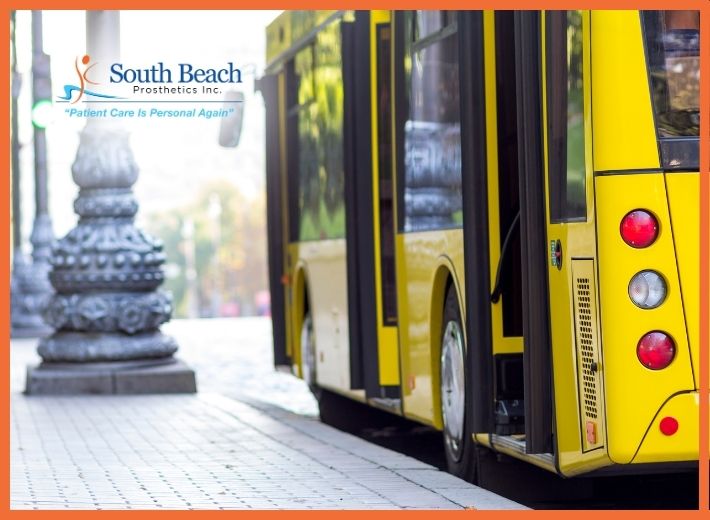
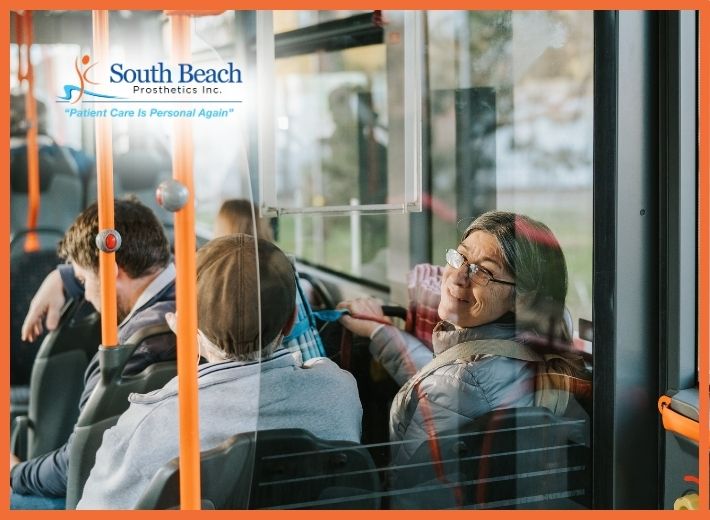
Our adapted transportation fleet ensures you can get where you need to go—no stress, no uncertainty, no barriers. Whether it’s a fitting, a doctor’s visit, therapy, or hospital follow-up, our drivers provide reliable, caring transport to and from your appointments.

1. Transporte incluido para todas las citas relacionadas con prótesis y amputación

Nuestra flota de transporte adaptado garantiza que puedas llegar a donde necesites ir—sin estrés, sin incertidumbre y sin barreras. Ya sea para una adaptación, una visita médica, terapia o un seguimiento hospitalario, nuestros conductores brindan un transporte confiable y atento de ida y vuelta a tus citas.

2. Full mobile support, including in-home visits

If traveling is difficult, our clinicians come directly to you. Fittings, adjustments, and follow-ups can all be done from home—so your care progresses without interruption.

2. Soporte móvil completo, incluidas visitas a domicilio

Si desplazarte es difícil, nuestros profesionales clínicos acuden directamente a tu hogar. Las adaptaciones, ajustes y seguimientos pueden realizarse desde casa, para que tu atención continúe sin interrupciones.

3. Precision-crafted, custom-designed prosthetics

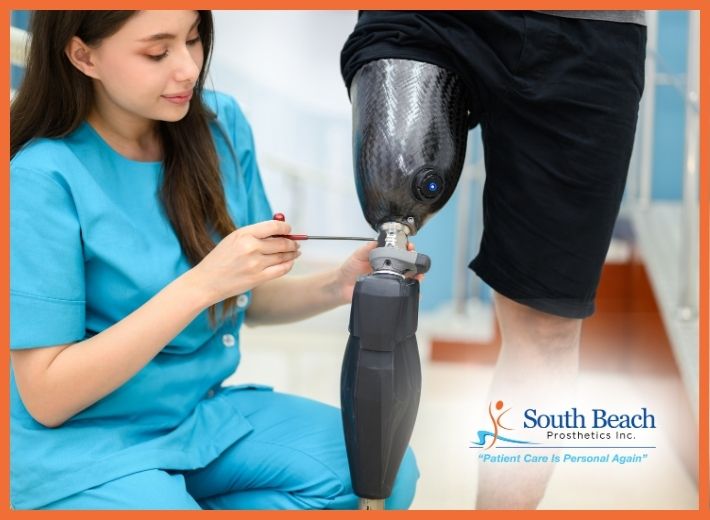
Using advanced technologies—such as FastSCAN laser-guided imaging, CAD-CAM design, and 3D-printed socket fabrication—we create prostheses tailored to your body and lifestyle for maximum comfort and function.

3. Prótesis personalizadas, diseñadas y fabricadas con precisión

Utilizando tecnologías avanzadas—como escaneo guiado por láser FastSCAN, diseño CAD-CAM y fabricación de encajes mediante impresión 3D—creamos prótesis adaptadas a tu cuerpo y estilo de vida para ofrecer la máxima comodidad y funcionalidad.

4. A long-term team invested in your success

We coordinate closely with physicians, therapists, hospitals, and families so that every patient receives cohesive, compassionate support from day one through long-term follow-up.

4. Un equipo a largo plazo comprometido con tu éxito

Trabajamos en estrecha coordinación con médicos, terapeutas, hospitales y familias para que cada paciente reciba un apoyo integral y compasivo desde el primer día y durante todo el seguimiento a largo plazo.
Llámanos en cualquier momento; estaremos encantados de ayudarte
(888) 819-4721
Línea de emergencia disponible las 24 horas, los 7 días de la semana

Why January 2026 Is the Ideal Time to Revisit Your Prosthetic Needs

The start of a new year naturally inspires reflection and recalibration—especially when it comes to mobility and comfort. Your prosthetic needs can change over time, whether due to limb volume fluctuations, lifestyle updates, or natural changes in activity levels.

January is a meaningful time to:

  • Reevaluate socket comfort
  • Explore updated technologies
  • Begin gait training or return to therapy
  • Address fit concerns that surfaced during the holidays
  • Set personal mobility goals for 2026

Your journey is personal, and your prosthesis should evolve with you. Our team is here to help you make 2026 a year where mobility feels more comfortable, more stable, and more achievable.

Transportation Included: So Nothing Holds You Back

The ability to access appointments consistently is one of the biggest predictors of long-term prosthetic success. That’s why our transportation support is designed with your comfort and independence in mind.

Our adapted vehicles provide reliable transport to:

  • Prosthetic fittings and adjustments
  • Physician appointments
  • Physical therapy and rehabilitation sessions
  • Outpatient clinics
  • Hospital visits
  • Nursing facilities—and more

Every ride includes a clean, sanitized environment and drivers trained to support patients with mobility needs.

When the logistics of getting to care are taken off your shoulders, it becomes much easier to focus on healing, movement, and confidence.

In 2026, Your Strength Meets Our Support

Whether 2026 brings big goals or small steps forward, you don’t have to navigate any part of this journey alone. South Beach Prosthetics is here to ensure:

  • A personalized, precise prosthetic fit
  • Maximum comfort with expert adjustments
  • In-home visits when travel is difficult
  • Included transportation to all prosthetic and amputation-related care
  • Compassionate support from a team that truly cares

Your determination is powerful—and with the right support system, it becomes unstoppable.

Step Into 2026 with Confidence
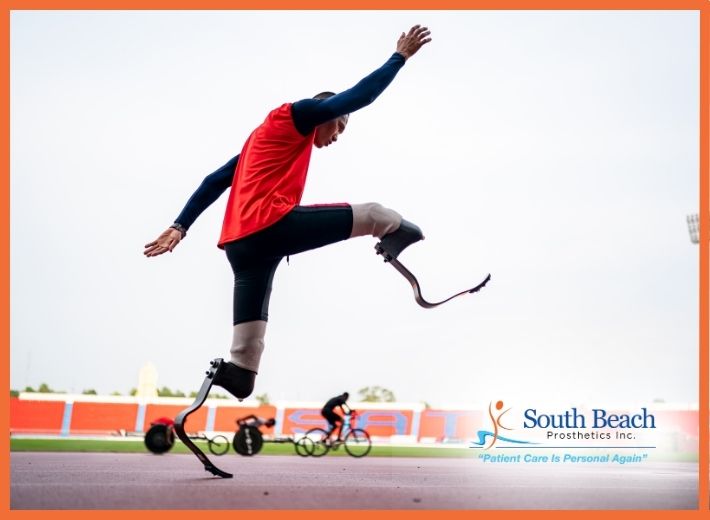
If you’re ready to begin the year with renewed comfort, mobility, and peace of mind, we’re here to help.

📞 Call (888) 819-4721 to schedule a fitting, request an in-home visit, or arrange transportation.
🚐 Request transportation online: https://www.southbeachop.com/transportation-services/
🌐 Learn more at SouthBeachOP.com

Join us on Instagram

The perfect fit. Maximum comfort. Compassionate care—with adapted rides or in-home visits to get you there.

Da la bienvenida al 2026 con confianza.

Si estás listo para comenzar el año con mayor comodidad, movilidad y tranquilidad, estamos aquí para ayudarte.

📞 Llama al (888) 819-4721 para programar una adaptación, solicitar una visita a domicilio o coordinar transporte.
🚐 Solicita transporte en línea: https://www.southbeachop.com/transportation-services/
🌐 Obtén más información en SouthBeachOP.com

Síguenos en Instagram

El ajuste perfecto. Máxima comodidad. Cuidado compasivo—con transporte adaptado o visitas a domicilio para llevarte donde lo necesites.


Essential Travel Hacks From a World-Traveling Amputee

As the holiday season approaches and travel plans kick into high gear, the challenges of navigating airports, security, and unfamiliar destinations with a prosthetic limb become magnified. Travel, even for the most seasoned globetrotter, demands a specialized level of adaptation and preparation. This is why the insights of a world-traveling amputee are so invaluable: they are built on years of optimizing movement and refining essential gear. Read on to discover the hard-won wisdom that will transform your travel experience.

South Beach OP provides the expertise to live fully, which absolutely includes seamless travel. We ensure your limb is optimized for long journeys and that you are fully prepared for every scenario. Let us help you end this year strong and ensure your holiday travel and 2026 adventures are supported by the ultimate in prosthetic efficiency and resilience.

Click To Read: Travel Hacks From a Globetrotting Amputee

Don’t let logistical worries dictate your destination or limit your adventures. Our cutting-edge and advanced prosthetic solutions can provide the support you need to conquer any itinerary. We wish you well and all the best for your endeavors in 2026! Our team is here to support you in every step, ensuring your travels are nothing short of extraordinary. Contact us today at 888-819-4721, or follow us on Instagram for more tips.

The Amputation Rehabilitation

Rehabilitation after an amputation is not just about healing—it’s about rebuilding independence, mobility, and quality of life. The journey can feel overwhelming, but with the right team and resources, patients can achieve remarkable progress. From physical therapy to advanced prosthetic technology, amputation rehab is designed to address the physical, emotional, and psychological aspects of limb loss, helping individuals regain confidence and control of their future.

According to Hopkins Medicine, common goals of rehab include strengthening residual limbs, learning new ways to move, and adapting to everyday activities. With a dedicated approach and personalized support, this process transforms what may feel like a setback into an opportunity for renewal.

At South Beach Prosthetics, we believe that no one should walk this road alone. Our expert team provides cutting-edge prosthetic solutions tailored to your unique needs, helping you master new skills and regain strength with confidence. We’ve seen firsthand how the right prosthetic care empowers patients to return not only to daily routines but also to the passions and goals that make life meaningful.

👉 Don’t let limb loss define you—let it inspire your comeback. Learn more about what to expect in the rehabilitation process by visiting this helpful guide. Then take the next step toward independence with South Beach Prosthetics. Call us today at 888-819-4721 or connect with us on Instagram to start your journey toward strength, mobility, and freedom.

Breaking Barriers: Jacky Hunt-Broersma’s Extraordinary Journey

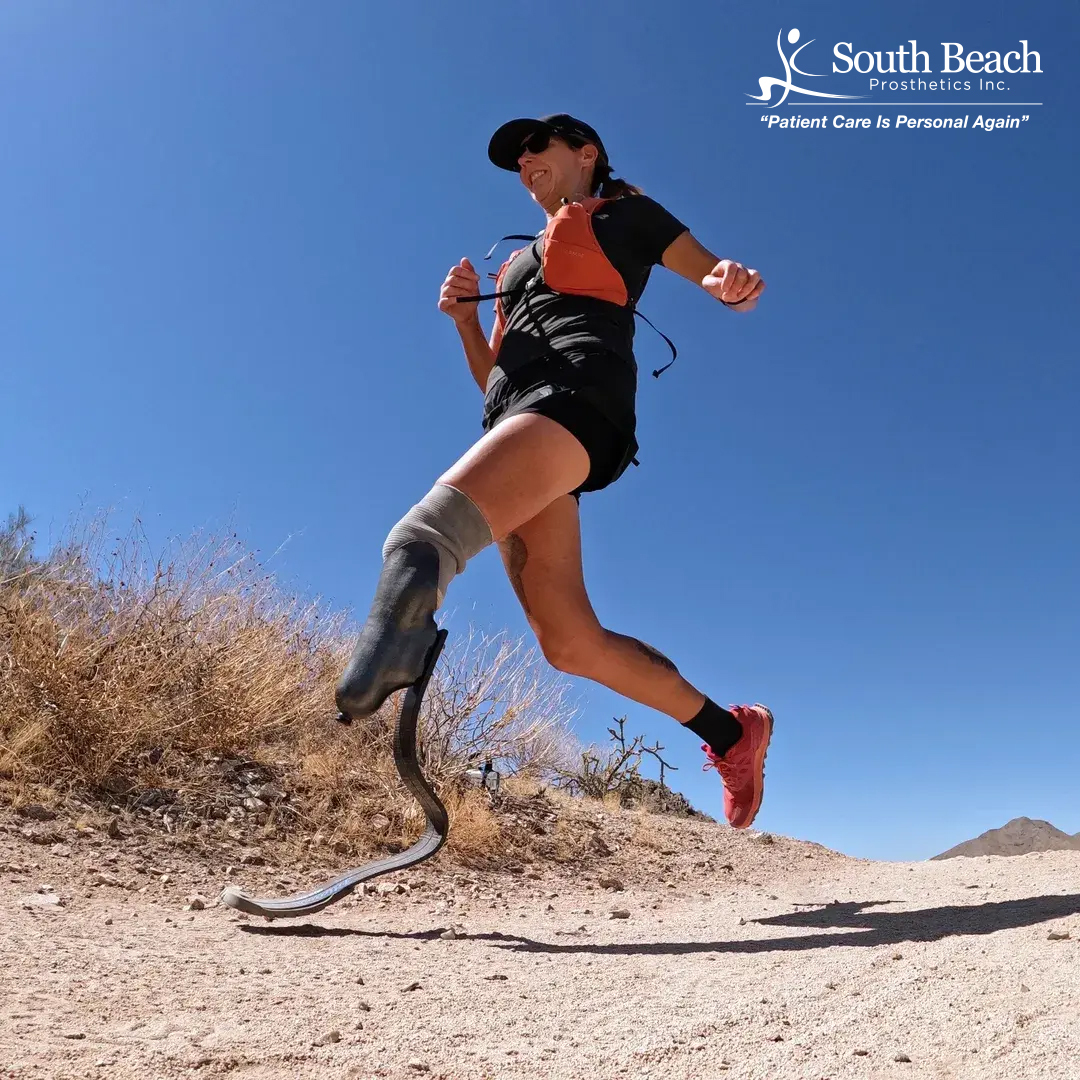
At South Beach Prosthetics, we believe every prosthetic tells a story of resilience, courage, and renewed possibility. Few stories embody that belief as powerfully as that of Jacky Hunt-Broersma—an ultrarunner, cancer survivor, author, and mother whose determination continues to redefine what’s possible.

From Cancer Diagnosis to Competitive Running

Jacky’s journey began in 2001 when she was diagnosed with Ewing sarcoma, a rare bone-associated cancer. At age 26, she underwent amputation of her left leg—an experience that marked both an ending and a beginning.

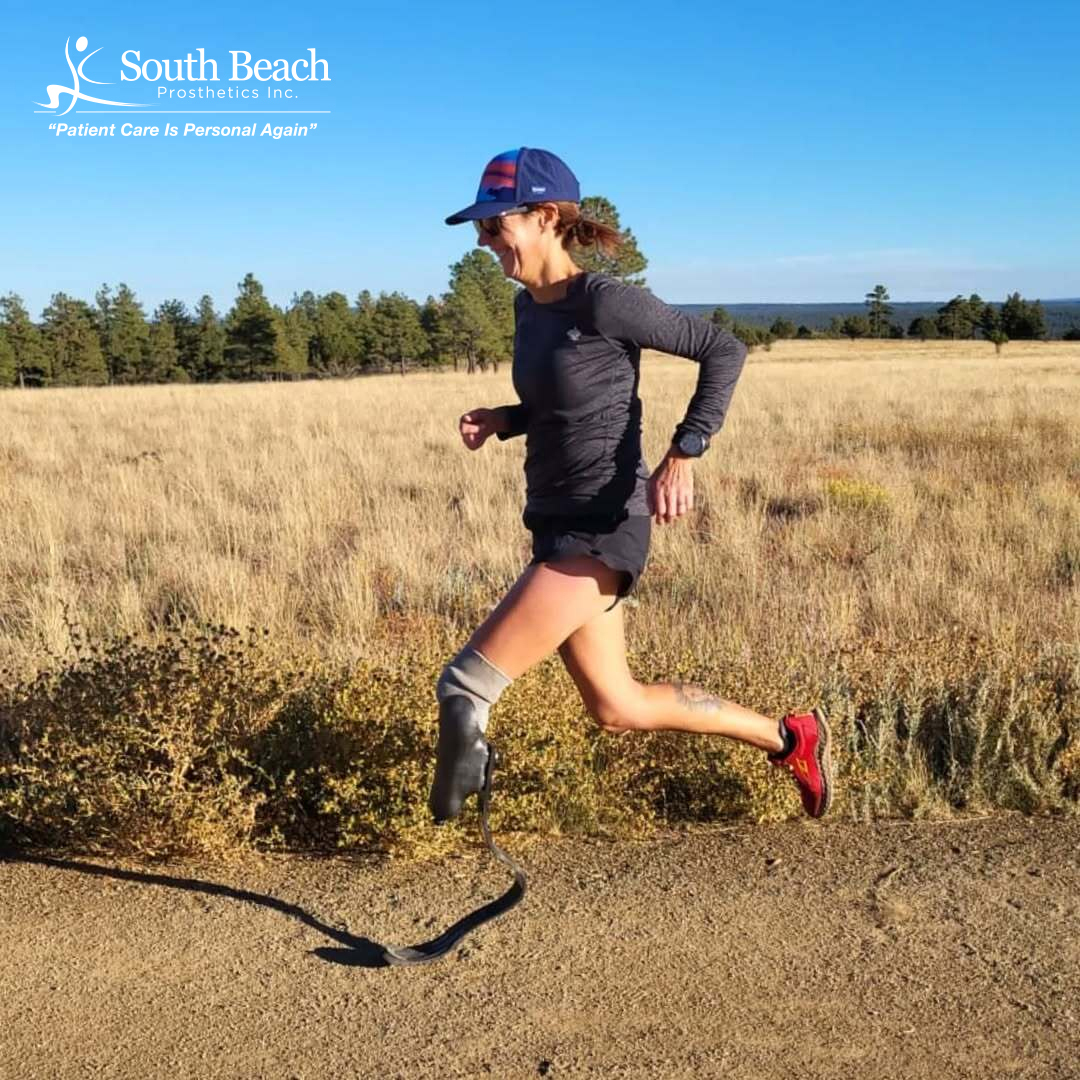
Despite the challenges that followed, Jacky discovered a path forward through running. She began her running journey in 2016, quickly progressing from local 5k races to ultramarathons—and proving her own doubts—and others’—wrong along the way.

Redefining Limits with Every Mile

Jacky has shattered records—and expectations—through unforgettable feats of endurance:

  • She became the first amputee to complete the TransRockies Mountain Stage Race in Colorado, a grueling multi-day, high-altitude trail event.
  • In 2020, amid pandemic disruptions, she ran 100 miles on a treadmill in under 24 hours, setting a new record among amputee athletes.
  • Her most widely recognized achievement came in April 2022 when she completed 104 marathons in 104 consecutive days, including the Boston Marathon in its inaugural para-athletics division—raising over $192,000 for Amputee Blade Runners along the way.
  • More recently, in March 2025, Jacky became the first amputee to run The Speed Project solo, a demanding 300+ mile route from Los Angeles to Las Vegas across desert terrain.

Each achievement spotlights not just physical grit, but a remarkable mental strength—and a commitment to empowering others.

More Than Miles: Inspiring Adaptive Sports

Beyond her racing accomplishments, Jacky is a voice for inclusion and hope. She’s authored a children’s book, Emma’s Brave Steps, and frequently speaks at schools and events, encouraging others—especially young amputees—to push beyond limitations.

She also shares candid accounts of the unique challenges of running on a prosthetic—including managing liner fit, blisters, tread wear, and equipment failures mid-race. Her transparency has helped others better understand what adaptive athletes navigate with strength and resourcefulness.

Source: @ncrunnerjacky

Why Jacky’s Story Matters to South Beach Prosthetics

At South Beach Prosthetics, our mission is to blend cutting-edge technology with humanity, helping clients reclaim independence and thrive. Jacky’s journey reflects exactly that:

  • Innovation in action: Her ability to run ultramarathons across deserts and mountains underscores the potential of modern prosthetic design—especially with advanced blades and personalized fit.
  • Resilience embodied: Jacky reminds us that an amputation isn’t an end—it’s a pivot into new possibilities.
  • Community and advocacy: Her fundraising and visibility help destigmatize disability and provide life-changing support to others.

Podcasts for the Mindset of Champions

Jacky’s story showcases mental toughness, but mindset isn’t just innate—it can be cultivated. Here are two podcast episodes we recommend for anyone looking to build resilience and guide young athletes with strength and empathy:

Ready to Explore What’s Possible?

Jacky Hunt-Broersma’s story reminds us that with the right support, adaptive athletes can redefine their limits—and in doing so, inspire a whole community. At South Beach Prosthetics, we’re dedicated to crafting personalized prosthetic solutions that empower you to live boldly, freely, and without compromise. Whether you’re an aspiring athlete, an experienced hiker, or simply someone pursuing your everyday best—our compassionate team is here to guide your journey.

Source: @ncrunnerjacky

Contact us today at (888) 819-4721 to schedule a consultation, explore innovative prosthetic options, or just learn how we can support your next adventure.

👉 And for parents raising young athletes, check out The Elite Competitor’s free training on how to best support your girl athlete with confidence, encouragement, and the tools she needs to thrive.

The Sky Is the Limit

In the world of extreme sports, where physical and mental boundaries are constantly being pushed, the story of one amputee is an inspiration to all. Highlining requires an immense amount of balance, focus, and determination. For individuals with limb loss, this might seem like an impossible feat, but as this story shows, it is not. Her story is a powerful call to fellow amputees to get inspired and find their new joys, proving that the sky truly is the limit.

Stories like these highlight the power of resilience and innovation. Amputees around the world are discovering new passions and pushing boundaries once thought unreachable—not because the challenges disappeared, but because the right support and technology made the impossible possible. At South Beach Prosthetics, our mission is to provide that same level of freedom and possibility through personalized, state-of-the-art prosthetic solutions. Whether your goals are everyday comfort or extreme adventure, we’re here to help you rise to the challenge. Call us today at 888-819-4721 to find out how we can help you or someone you care about. 

“I’ve always had terrible balance,” says Breeanna Elliott. That’s not an uncommon refrain among lower-limb amputees, even those who (like Elliott) grew up with a limb difference and have walked with the same gait all their lives.

So how did she end up traversing a slackline strung between two sheer, 300-foot-high redrock cliffs near Utah’s Canyonlands National Park? “At first it seemed impossible,” Elliott laughs. “But I’ve learned to trust my body, and I’m willing to fall. I have fallen a lot. And I’ve learned to trust that.”

To be clear, Elliott doesn’t mean she has plunged glumly to the desert floor, a la Wile E. Coyote. She’s spent two years practicing on slacklines just a few feet off the ground, tumbling off and getting back on more times than she can count—not unlike what many new amputees go through while learning to walk with a prosthesis. The process has tested her patience as times. But the effects have been transformative.

“It’s given me a lot of self-confidence,” explains the 32-year-old Elliott. “It’s a meditative exercise that requires thoughtful breathing and full awareness of where your weight is, how your hips move, where your feet are. It’s given me a level of body awareness I’ve never had before, and that’s critical for amputees. That’s one of the reasons I’ve started to prosyletize this. I think there should be a slackline in every prosthetist and PT clinic. The beauty of it is that the bar is really low. Just take a step—that’s all you have to do.”

Elliott’s desire to introduce more amputees to slacklining led her to Faith Dickey, world renowned for her mastery of highlining (ie, slacklining at extreme elevations). Dickey, who operates the nation’s first highlining guide service (Elevate Outdoors), shares Elliott’s convictions that a) anyone can learn to walk a highline (or slackline), and b) it’s a whole-health activity that strengthens mind, body, and spirit.

That’s the roundabout answer to the question of how Elliott found herself balancing in midair on a slackline. Last weekend, she and four other people with disabilities gathered in Moab for a day-long highlining session with Dickey at the Fruit Bowl, one of the sport’s most iconic locations. Three of the participants—including a dude who lost his leg above the knee just eight months ago—had never previously walked a slackline at any height, much less at the Fruit Bowl’s dizzying altitudes. Nevertheless, everybody made the harrowing crossing with relative ease.

Everyone also fell multiple times, but NBD: Dickey’s failsafe system of harnesses, straps, carabiners, and helmets kept everyone intact and unharmed. By day’s end, Elliott was falling off the line on purpose to practice her remounts, while one of the first-timers was belting out show tunes as she skipped across the canyon. “It was the best weekend,” Elliott said afterward.

She hopes it will be the first of many. Elliott and Ryan Juguan (another of last weekend’s Fruit Bowlers) have launched the Adaptive Slacklining Association, a brand-new nonprofit dedicated to building a connected community of slackliners with disabilities.

We’ll be writing more about Elliott’s slacklining journey in a future print edition. For now, here’s a quickie Q+A transcript (lightly edited) of our conversation with her a few weeks before the Fruit Bowl festivities.

Life doesn’t stop—it just shifts into a new gear. 💪

How did you get introduced to slacklining?

Some friends showed me how to do it. It was a little frustrating at first, because they didn’t have any experience with amputees or disabled people, so there were this level of overenthusiasm. I was like: Calm down, I just took one step ok? When I looked online to try to find videos of amputees slacklining, there was almost no information about adaptive slacklining. That was one of the main inspirations to start the Adaptive Slacklining Association. The goal is not only to introduce this to people and talk about our own individual ways of adapting, but also to explain why these skills are so important for daily life, preventing falls, and just staying healthy.

I have the impression that this is a very tactile sport. Every time I’ve seen people do it, they’re barefoot or in their socks. Since your left foot is prosthetic, what adaptations do you have to make for that?

It is extremely tactile, in the sense that you must trust the rope by feeling it with your feet. You should never be looking down at the line at all, because that affects your balance. You need to be looking up the entire time and feel where your foot goes. Obviously I feel nothing on my left side, so I’ve had to develop a lot of trust by concentrating on where I’m putting my knee. I don’t take steps the same way other slackliners do. I don’t have that much movement in my ankle component, so I’ve become really good at pushing my heel against the rope first. Sometimes I’ll use my big toe to touch a particular spot on my foot shell, and that would tell me that my feet are in line. The goal is stay completely in line with the rope, with only side-to-side movement, and only with your arms. But I can’t predict when my foot will be a little off, so I move around more. It’s a less elegant way of slacklining. When I was first learning, people were trying to correct that and telling me not to move, but that’s just not an option for me. I’ve actually gotten pretty good with a lot of movement to compensate for my left leg, but it’s controlled movement.

How long did it take you to figure all of this out?

It took me a while, a lot of trial and error. When I first started, I had people watching me and trying to correct me in particular ways that are pretty common to the sport, but not things I could do. I could get a couple of steps in, but I never felt like comfortable until I started doing it on my own and working with my own body. Before slacklining, I could never balance on my left leg, and I thought it was truly impossible. And now I have pretty fabulous balance, better than someone who has a full limb.

Redefining what’s possible. South Beach Prosthetics. SouthBeachOP.com

Has your prosthetist supported you in this? Or are they afraid you’re going to injure yourself?

David (Mahler) has been incredibly supportive. When I first started slacklining, I told him I have gained balance that I’ve never had before. David was like, “Send me a video,” and he was blown away. He has been encouraging me to continue with my interest and making suggestions. He suggested that I try a hydraulic ankle. I was pretty reluctant, because it’s not very good for running, but David was itching for me to try it. He gave me a display model so I could check it out, and it did give me a range of movement I’ve never had, and that has been really helpful in the movement I have to do to get my foot on the line. This leg has a dynamic component that allows me to put pressure on the line, and then the foot moves down. That has made it possible for me to do some moves that I couldn’t have adapted as easily.

At what point did you start thinking you might be good enough to try highlining?

One of the first people who introduced me to slacklining made it seem that highlining might be impossible for me, and that never sat very well with me. I knew highlining existed, and I just really wanted to try it. After I started doing really well [with slacklining], I started thinking I could really do [highlining]. But there’s a pretty significant barrier to it, because you need a lot of safety gear. So I just randomly called Faith, and I explained who I am and why I’m interested. She was really enthusiastic. Just a few weeks earlier she had worked with someone who had brittle bone disease, and that was an awesome experience for her and she wanted to open up the sport to more people. That fit right into my vision of this being a community. I didn’t want to be a singular disabled person in a community of slackliners who are not disabled.

With the right tools, you can achieve anything. If you’re ready to redefine your limits, our cutting-edge and advanced prosthetic solutions can provide the support, stability, and freedom you need for new adventures. Contact us today at 888-819-4721, or follow us on Instagram for more tips.


Reference: [https://livingwithamplitude.com/amputee-highlining-adaptive-slacklining-breeanna-elliott/]

How Public Transit Connects to Limb Loss

There’s a link between public transit access and health outcomes. While research has long suggested that robust transit networks foster healthier communities, new direct evidence sheds light on a surprising connection: the impact of transportation on limb loss. Dive in to understand what these studies mean for healthcare access and community well-being, and how the piece emphasizes how limited mobility and access to consistent care can directly contribute to worsening health outcomes, especially for those with diabetes or vascular conditions.

If you’ve ever missed a doctor’s appointment because you couldn’t find a ride to the clinic, you understand the relationship between public transit and health outcomes. A large body of research has established that communities which lack easy access to public transit are less healthy, in the aggregate, than communities with extensive, affordable transit networks.

Various studies have shown that transit access can reduce rates of heart disease, diabetes, obesity, vascular diseases, and other conditions associated with limb loss. Based on that evidence, it’s logical to infer that transit access affects the rate of limb loss as well. But there was never any direct data to support that inference until last month—and, in a mild surprise, the findings are less definitive than we might expect.

The study appeared in BMJ Open Diabetes Research and was conducted by researchers affiliated with Emory University. They examined the correlation between public transit and a specific type of limb loss, ie amputations caused by diabetic foot ulcers (DFUs), and they limited their study to a single state (Georgia) over a four-year period (2016-19). Ergo the conclusions are highly contingent and not readily generalizable. But they’re still important, insofar as this is apparently the first rigorous look at the associations between transportation access and DFU outcomes in the United States.

The authors focused on Georgia for reasons beyond simple proximity (Emory is located in Atlanta). Georgia offers a good study context because it has a high prevalence of diabetes, above-average rates of socioeconomic distress (low income, low education), and large racial and ethnic minority populations. All these demographic markers correlate with high DFU incidence, high amputation rates, and heavy reliance on public transit. The authors hypothesized that “increased access to healthcare through public transportation measures at the ZIP code level is associated with a decrease in DFU-related amputation rates.”

Makes sense so far, right? During the four-year study period, Georgia logged 1.1 million DFU cases, 14,782 minor amputations (ie toes and partial feet), and 6,606 major amputations (limb loss at the ankle or higher). The researchers plotted all those incidents by zip code, then wove in data regarding the proximity of transit stops, proximity of primary healthcare facilities, prevalence of automobile ownership, per-capita public transit expenditures, and a handful of other markers.

After crunching all those numbers, the authors determined that:

  • Higher rates of public transit commuting—ie, higher reliance on public transit—were associated with higher amputation rates, particularly in zip codes with high rates of poverty. However, the inverse effect was observed in affluent zip codes with high proportions of household car ownership, which suggests that when riders choose public transit as an option rather than a necessity, they may derive limb-preserving health benefits from the higher activity levels (eg, walking to/from transit stops) involved in bus/train ridership.
  • Heavier investment in public transportation was associated with lower amputation rates. Here, too, the correlation was affected by socioeconomic factors: In the lowest-income zip codes, amputation rates were not affected by gross public transit expenditures.
  • Finally, distance to transit stop was associated with increased amputation risk in low-income zip codes.

“Transportation is clearly a significant barrier to care for chronic diseases, including DFU, particularly for low-income populations,” the authors conclude. “Potential solutions to this problem include NEMT [non-emergency medical transportation], telemedicine, and mobile care….Future studies could investigate the impact of transportation assistance in conjunction with telemedicine and/or mobile clinics for DFU care.”

Your journey to mobility and health shouldn’t be a struggle.

At South Beach Prosthetics, we understand that getting to your appointments shouldn’t be a barrier to recovery. That’s why this article deeply resonates with us. We’ve built our patient-first model around eliminating those access issues. Included in our care: no-cost transportation to and from all South Beach Prosthetics appointments, ensuring patients never have to choose between care and convenience. It’s not just about prosthetics—it’s about supporting the whole patient, every step of the way.

In fact, we go even further by offering in-home care as part of our standard service package if you prefer it. For patients with mobility issues or heightened risk factors, being able to receive fittings, adjustments, and follow-up evaluations from the comfort of home can make a world of difference. Articles like this one affirm why comprehensive, wraparound care isn’t just a value-add—it’s essential.

If you or a loved one is facing limb loss, know that our cutting-edge and advanced prosthetic solutions can empower a life of renewed independence. Contact us today at 888-819-4721, or follow us on Instagram for more tips.


Reference: [https://livingwithamplitude.com/amputation-diabetic-foot-ulcer-public-transportation/]

Summer Tips for Thriving as an Amputee

Summer is the perfect time to embrace adventure, and being an amputee doesn’t have to slow you down! With the right tools and mindset, you can soak up the season’s best moments. Today’s innovations make it easier than ever to stay active and comfortable in the heat. Let’s make this your most empowered summer!

It’s sunny, the frozen margaritas are flowing, shorts-and-sandals season has arrived. Cities are reopening after lockdown, and travel restrictions are slowly being lifted. You’re feeling ready to gallivant in the sunshine and work on your tan at the beach. The only problem? You wear a prosthesis.

Those of us who live in warmer climates are very familiar with the struggles that come as the temperatures warm up. As a Floridian, I live within what most would consider year-round summer. My nemesis—sweat—is an issue from February to October, with a brief and sometimes non-existent respite around the holidays. So how exactly can you thrive during sweaty season? Here’s how I manage it down here in the tropics. You may find some of these strategies useful.

Let’s start with the biggest issue—liner sweat. We’ve all had those days when you can pour a glass full as you peel off your liner. Excessive sweat can cause skin irritation, bacteria growth, and, worst of all, liner slippage, causing your entire prosthesis to slide off in some cases. When I’m planning a full day out in the sun, I always bring a small towel, gentle cleanser, baby wipes, a travel-sized bottle of rubbing alcohol or hand sanitizer, and extra socks. I remove my liner periodically, empty any sweat pooling inside, and wash my residual limb with the cleanser (or a baby wipe in a pinch). I dry myself off and put the liner back on with either alcohol or hand sanitizer. I always keep extra socks handy, in case I have volume changes in my limb throughout the day and need to maintain a secure fit on my socket.

These supplies are especially helpful for beach trips, which in my case happen pretty routinely. It’s critical to get all the sand and saltwater off your prosthesis and liner after a swim to avoid any internal damage to the hardware and itching inside the liner.

Of course, sweat happens in places other than your residual limb, especially in summer. That brings me to my next subject: breathable fabrics. Leg amputees use at least 30 percent more energy when walking than the average able-bodied person, and some days it feels like 200 percent more. Comfortable cotton clothing and shorts give me easy access to my prosthesis, cuts back on overheating, and makes me less irritable when the inevitable liner issue or other amputee problem arises in the middle of a trip to Disney World. Keep in mind that wearing shorts will expose your prosthesis and offer less protection than pants offer. Companies such as Alleles and UNYQ offer beautiful and protective prosthesis covers that can keep damage at bay and let you express yourself via vibrant colors and designs. They’re often covered by insurance as durable medical equipment.

Sandals and flip-flops are really what kick me into the summer vibe. As my first amputee summer approached, I dreaded the thought of having to wear sneakers and boots in the middle of July. I worried my five remaining toes would never see the sun again. After much trial and error, I have learned that I can indeed wear sandals with some minor modifications. Here’s the trick: the sturdier the straps, the better. No one wants a shoe flying off mid-step (and trust me, it can happen), so I go for shoes that wrap well around my foot shell. If you prefer to wear slides or flip-flips, try a heavy-duty Velcro and line up a piece both on the bottom of your foot shell and on the flat part of your shoe. This will create more grip.

Finally, there’s the issue of mobility aids. We all spend more time outdoors when the weather’s fine and the sun is shining. That usually translates into more walking, more sweat, and more stress on the residual limb, and so forth. When you don’t feel like dealing with those issues on a given day, there is absolutely nothing—I repeat, NOTHING—wrong with using crutches or a wheelchair, even if you might be capable of walking. When we overexert our residual limb, blisters and bruising can form, therefore making it difficult to walk in the days that follow. And if you’re too busy and active to manage the sweat in your socket, your leg will eventually just slide right off, leaving you stranded.

There’s nothing shameful or weak about taking care of yourself. That’s the golden rule of living your best hot amputee summer. Know your limits, listen to your body’s cues, and make the adaptations you need. Bonus points if you can get a friend or family member to push you around in a wheelchair smoothly enough that you don’t spill your margarita.

Your summer, your way. Empower your independence! Discover how our cutting-edge and advanced prosthetic solutions can help you thrive. Contact us today at 888-819-4721, or follow us on Instagram for more tips.


Reference: [https://livingwithamplitude.com/amputee-sweat-survival-skills/]

Your Home Recovery System for Lower Limb Amputees

Amputees rely heavily on their unaffected limbs, and when these are injured, adapting mobility and daily life requires thoughtful preparation. While standard recovery methods may present obstacles, having the right strategies and equipment at home can empower you to maintain independence and navigate these challenges effectively. Read on to discover practical tips for building a supportive home system that promotes continued independence during times of injury.

We pride ourselves on our availability, clear communication, and honest answers. To make sure that you are getting this level of patient care, each patient is provided with a Care Team, which includes a Director of Patient Care, as well as an Amputee Consultant. Give us a call and learn how we can support you — so many ways, including transportation services and in-home care = all included. Let’s talk! We would love to meet with you and discuss your situation. Contact us to discover our high-quality care for yourself.

In a perfect world, amputees’ unaffected lower limbs would be exempt from all injury and inconvenience. There would be no bruises, sprains, strains, breaks, or blisters to intact legs. Those limbs already work overtime, are often ignored, and are as indispensable as any socket, joint or appendage on a prosthesis.

For all amputees, injuries to an unaffected lower limb come with a list of complications that might be hard for a general practitioner or even an orthopedist to understand. Mobility and transfers will be different. Rehab exercises will need adjustment. Upper-limb amputees who break a leg or sprain a knee might have difficulty using crutches, canes, walkers and wheelchairs. Lower-limb amputees may be completely non-ambulatory until their intact leg heals.

I’m a 51-year-old left-below-elbow congenital amputee, and I’ve dealt with many leg injuries throughout my life. Most recently, I had tendinitis in my ankle—its exact cause is still under investigation by a podiatrist and orthopedic surgeon.

It’s difficult for me to manage two crutches with one hand. Using one crutch on the right is fine for a very short distance, but isn’t going to get me across a parking lot. A walker won’t work without a special attachment—I would have to lean down to my right in order to use my nub on the left handgrip, and that would create imbalance and instability. A self-propelled wheelchair is impossible. I looked up knee crutches online, but don’t think I have the upper body strength to stay upright on what seems like a short stilt. I’m still healing and not ready to try a cane.

The solution I settled on is a knee scooter with a telescoping handle that brings the handgrips up to waist level. It keeps me mobile, but it’s bulky for use around the house and cumbersome for trips away from home. So far, I can’t run errands, or get to work or doctor’s appointments by myself—I need help with driving and moving the knee scooter in and out of the car.

In addition to wearing a heavy boot on my right ankle, I’ve braced my left knee and left ankle trying to protect those joints from strain. They are doing all the heavy lifting. My right wrist, already sensitive from years of overuse, needs a brace for protection, too, as it bears my weight moving from bed to scooter, toilet to crutches, scooter to car, and so on. I feel a little like Darth Vader covered in my black protective gear.

My family has placed barstools near the bathroom sink and kitchen counter, so I can sit while I brush my teeth or butter my toast. And, like a queen in her castle, I move around my home with a bag of essentials such as lotion, phone chargers, heating pads and a bottle of water. (Also, a book and reading glasses, a bottle of ibuprofen, and some snacks.) This saves me trips and makes life easier for my family members, who, try as they might, can’t possibly remember everything I need.

A lesson I learned after having two children by C-section is to keep medication and water in places where you sit down often—keeping them safe from small children and pets, obviously. If you’re taking more than one medication for pain, or forget your doses and schedule; keep a notebook with your medicine and write down when you’ve taken it. It might also be a good idea, if you’re having trouble getting around, to write down how much water you’ve had and how often you’ve eliminated. You can’t afford to restrict drinking and urinating, even though getting to the bathroom is a journey you can’t manage alone.

I am discouraged by how difficult it is to accomplish any task and how small my world will be until I’m mobile again. However, I’m able to bear weight on my injured ankle now, and that is a huge relief.

Educating Your Team

Tim Sullivan, a Los Angeles-based physical therapist, says being prepared for an injury to the unaffected lower limb requires maintaining the health of all unaffected limbs. “It’s important to stabilize your load,” he says. “We like to say ‘motion is lotion,’ so you should move, but not overdo things. You want to avoid overstressing the uninvolved side before it becomes the involved side.”

That includes ensuring the fit of the prosthesis, caring for the skin, and keeping up with occupational therapy or gait training. All amputees need to strengthen their core and back. Your prosthetist and physical therapist can help you address your residual limb’s safety while using boots, crutches, and other mobility devices to support the injured limb. There’s no one-size-fits-all solution; it depends on the location of your amputation, what type of leg injury you have, your overall fitness, and your comfort preferences. Upper-limb amputees need to adapt their activities and gather tools to prevent overuse of wrists, elbows, and shoulders. An injury to the unaffected side can expose and exacerbate weaknesses in overall stamina and strength.

When you’re receiving treatment to an injury on your unaffected lower limb, be ready to advocate for your specific needs. “We would love to think that practitioners are fully aware of what you’re going through, but you’re going to need to talk to your provider about what your amputation entails for you every day,” Sullivan says. “Educate your caregivers, and educate your team.”

Setting Up Your System

For injuries and treatments to the unaffected lower limb, amputees need specific tactics and tools to get through their hardest days. Life is too short to move around in bubble wrap, but if you get hurt, you want to be prepared. If you don’t already have all the following equipment at home, think about setting up your kit, just in case.

  • Braces for knee, ankle, hip, wrist and shoulder
  • Crutches
  • Walker, wheelchair
  • Knee scooter
  • Toilet riser
  • Shower chair
  • Bolster pillows
  • Reacher tool
  • Bathroom rails
  • Recliner with lift
  • Hospital bed

Most of us have found being an amputee isn’t a free pass for having other health issues. There will still be stomachaches, stuffy noses, and opportunities to trip, twist an ankle, or wear out a knee joint. These injuries have nothing to do with being an amputee. Recovery, however, depends on accommodating our amputation along with the injury.

Empower your independence, even during recovery. Discover how our cutting-edge and advanced prosthetic solutions can help you thrive. Contact us today at 888-819-4721, or follow us on Instagram for more tips.


Reference: [https://livingwithamplitude.com/amputee-injuries-unaffected-lower-limb/]

How AI Is Shaping the Future of Amputee Care

Artificial Intelligence (AI) is revolutionizing healthcare, and its impact on amputee care is nothing short of transformative. These innovations are not only improving mobility and functionality but also enhancing quality of life and independence. Read here how AI is paving the way for smarter, more intuitive solutions in amputee care. Questions? We are here to answer them! 

Some would argue that artificial intelligence has been improving amputees’ lives since the 1960s, with the introduction of pattern recognition in myoelectric arms. At the very latest, AI-driven prosthetic technology has been around since the 1990s, when the C-Leg debuted. And almost all would agree that there’s enormous potential for future growth in this realm (viz. “The Midas Touch” in our new print edition).

But the emergence of ChatGPT and other large-language models (LLMs) has vastly broadened the potential for amputee-serving AI applications. In addition to making prosthetic limbs more lifelike than ever, AI is now driving innovation in socket design, prosthesis alignment, adaptive fitness, caregiving, and beyond.

We surveyed the literature to get a sense of where and how researchers are employing AI to enhance (and potentially transform) limb care. Not all of these applications are in clinical use yet, and some may never get there. But one way or the other, the algorithms are on the march and there’s no stopping them. Here’s how AI might impact your life before long.

Supporting caregivers: Researchers at the University of Pittsburgh developed a responsive knowledge base called CaLM (Caregiver Language Model). The prototype, aimed at caregivers of patients with Alzheimers and related forms of dementia, allows users to get accurate, real-time information to answer their questions and ease their anxieties. “The intricate care requirements associated with [cognitive and behavioral diseases] present a complex challenge that caregivers must navigate, often without formal training,” the authors write. “Given the progressive nature of these conditions, caregivers are in need of long-term support and strategies, underlining the importance of a dedicated resource like the CaLM….The model can provide substantial support to a vast community of caregivers who are frequently underserved when it comes to specialized care resources.” The researchers hope to expand on this pilot project to develop parallel tools for other conditions requiring ongoing care, including limb loss. Read the full paper at JMIR Formative Research.

Streamlining socket fabrication: Members of an international collective called the Residual Limb Shape Capture Group introduced a novel approach using AI to develop digital socket templates based on a prosthetist’s previous work in traditional (plaster-based) fabrication. Using 3D scans, the AI essentially learns a given prosthetist’s methods for manual fabrication, then translates that knowledge into templates for new limb models. “The AI-generated sockets closely matched those made by hand, with only small differences,” the authors conclude. “This new process has the potential to save time and make socket fitting more consistent, helping individuals with amputations receive faster and more accurate prosthetic care.” Here’s the full paper at Prosthesis.

Managing exercise: A pair of experts in diabetes management and rehabilitation found the subscription-only version of ChatGPT to be a reliable source of information about exercise for Type 2 diabetes patients. They asked ChatGPT for the best clinical recommendations about exercise types, frequency, intensity, duration, etc., along with questions related to nutrition, weight maintenance, comorbidities (such as kidney disease), and other aspects of fitness. “ChatGPT provided relatively valid, safe and useful information about exercise for type 2 diabetes,” the authors concluded, but they added a couple of caveats: Patients should only use ChatGPT in conjunction with medical guidance from a human clinician, not as a primary source of information; and the finding doesn’t apply to the free version of ChatGPT (currently v4o). Read the full paper at BMJ Health & Care Informatics.

Standardizing prosthesis alignment: After a systematic literature review, a team of biomechanics experts concluded that AI algorithms and alignment tools hold tremendous potential to enhance accuracy and reduce human error in transtibial prosthesis alignment. “Current practices for transtibial prosthesis alignment lack standardization, leading to various health complications,” the authors assert. “The absence of automated approaches for prosthesis alignment hinders the accuracy and efficiency of the alignment process.” The need is particularly acute in developing nations where the availability of clinical expertise falls far short of the demand. The full paper is paywalled, but you can read the abstract and introduction at Artificial Intelligence in Medicine.

Determining amputation level: This one scares us a little….okay, a lot. Orthopedists at the Ege University School of Medicine in Izmir, Turkey, submitted clinical photographs of diabetic foot ulcers to ChatGPT and asked it to recommend the optimal amputation level. In 50 out of 60 cases, the bot’s recommendation was identical to the amputation the human clinicians actually performed. In the remaining 10 cases, ChatGPT prescribed a more proximal (ie, higher) amputation than the flesh-n-blood docs. “Relying solely on clinical photographs,” the paper concluded, “ChatGPT-4.0 demonstrates decisions that are largely consistent with those of an experienced team in determining the optimal level of amputation for DFUs.” Personally, we’re a long way from trusting ChatGPT to dictate a surgical procedure; we don’t even trust it to write email for us. But read the abstract at the International Wound Journal and judge for yourself (full paper is paywalled).

Optimizing MPK leg controllers: Here’s where things start to get meta. Levi Hargrove and colleagues at the Shirley Ryan AbilityLab are working on a process in which AI-generated gait patterns are used to improve the performance of a bionic leg’s mid-level controller—which is itself an AI-equipped unit. In other words, it’s an AI trainer for an AI device. Crazy, right? The core benefit of such a system would be to eliminate the need to gather training data from individual volunteers, which would a) make the training of prosthetic leg controllers more efficient and more effective, and b) lower R&D costs and (in theory, anyway) accelerate the pace of innovation. The system’s still in development and hasn’t been tested with actual prosthesis users yet, but it doesn’t pay to bet against Hargrove. Full study at the Journal of Neuroengineering and Rehabilitation.

Assessing limb-loss risk in PAD patients: A Mayo Clinic team trained AI to analyze Doppler waveforms in patients with peripheral artery disease and accurately assess the risk of limb loss. In a study encompassing more than 2,000 patients over a five-year period, the AI tool accurately predicted adverse outcomes including death, major cardiac events, and limb loss. “The AI tool described in this article has several unique advantages whereby both the 1‐ and 5‐year risk for [limb loss] can be estimated well before chronic limb‐threatening ischemia occurs, solely on the basis of deep neural assessment of a posterior tibial arterial waveform Doppler signal,” the authors explain. By combining AI analysis with an easy‐to‐perform, noninvasive Doppler test, clinicians can better identify at-risk patients before their symptoms become acute and intervene early enough to prevent some amputations. Read it all at the Journal of the American Heart Association.

Promoting participation in parasports: A Brazilian bioscientist is exploring AI’s potential to help people with disabilities overcome barriers to participation in physical fitness activity. “Personal and environmental obstacles linked to disability hinder access to venues and services,” he observes. Many amputees are deterred from exercise by the logistical complexities of acquiring equipment, traveling to fitness facilities, and receiving informed coaching. Once they’ve solved those problems, amputees must still overcome factors such as pain, stamina, and discomfort about exercising in public settings. “AI has now emerged as a promising tool to overcome these barriers, offering innovative and personalized solutions to meet the individual needs of those who use it,” the paper concludes. It’s paywalled at the Journal of Bodywork and Movement Therapies.

Experience the latest in prosthetic technology with our advanced prosthetic solutions. Our expert team will work closely with you to find the best solution for your unique needs and help you get back to living life to the fullest. Contact us today at 888-819-4721. Follow us on Instagram for more tips.


Reference: [https://livingwithamplitude.com/ai-amputee-care-artificial-intelligence/]

The Beauty of Perpetual Innovation

Limb loss doesn’t challenge us to fix what’s broken. It offers us the chance to create ourselves—and our futures—anew. Learn more useful tips from a leadership coach and amputee.

THE PROBLEM WITH SOLVING PROBLEMS

Experience the beauty of movement again. South Beach Prosthetics is here to help you every step of the way, from designing the prosthesis to getting you to the perfect fit. Contact us today at 888-819-4721. Follow us on Instagram for more tips.


Reference: [ https://livingwithamplitude.com/article/the-problem-with-solving-problems/ ]

Let’s book you an
appointment!

We looking forward to meeting you.

To schedule an appointment, please call our office at (888) 819-4721, or fill out the form below with your preferred appointment time, and our staff will get back to you!

Contact Info